Why Choose Solar Power for Your Business?
Solar power has moved from a niche option to a serious business investment. The International Energy Agency’s World Energy Investment 2024 report estimated that global solar photovoltaic investment would exceed $500 billion. That figure reflects more than optimism. It shows manufacturers, utilities, and companies are committing real capital to cleaner electricity.
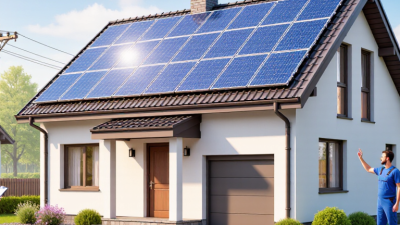
The financial case is also becoming stronger. According to IRENA’s Renewable Power Generation Costs in 2023, the global weighted-average cost of electricity from utility-scale solar photovoltaics fell by 12% in one year. It has declined by about 90% since 2010. For a factory, warehouse, or office, rooftop panels can reduce daytime electricity purchases. They can also protect part of the budget from volatile grid prices. The savings appear physically: panels absorb sunlight above a loading dock while production continues below.
Still, solar power is not free power. Roof age, shading, local weather, grid rules, and maintenance costs can change the result. Battery storage may improve resilience, but it also increases upfront spending. A credible decision requires an engineering assessment, transparent financial modeling, and realistic production estimates. The IEA’s Renewables 2024 analysis expects solar PV to lead renewable capacity growth through 2030, yet forecasts are not guarantees. Businesses should examine their own electricity profiles rather than follow a trend blindly. That caution matters. Done carefully, solar can lower operating emissions, strengthen energy planning, and support measurable sustainability goals.
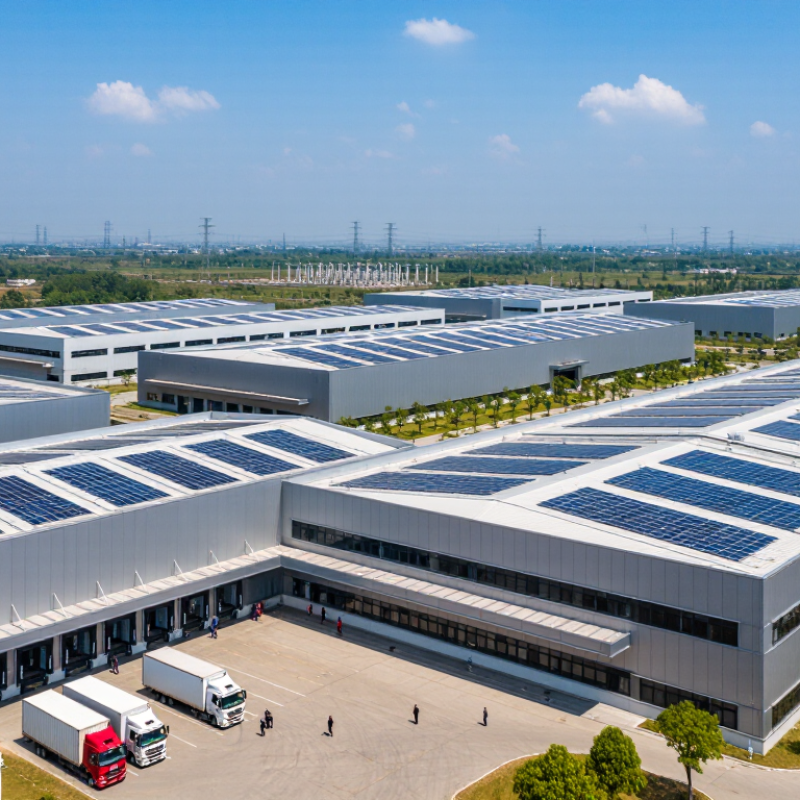
A modern business treats energy as operational infrastructure, not merely an overhead expense. Solar power can turn unused roof space, parking structures, or nearby land into productive assets. The roof becomes infrastructure. According to the International Energy Agency’s Renewables 2024 report, solar photovoltaic capacity expanded by about 425 gigawatts in 2023, representing roughly three-quarters of global renewable additions. This growth reflects stronger economics, improved technology, and rising demand for lower-carbon electricity.
For businesses, solar power can reduce exposure to volatile electricity prices and support measurable emissions reporting. The International Renewable Energy Agency reported that global solar photovoltaic capacity reached approximately 1,419 gigawatts by the end of 2023. A warehouse with daytime cooling loads, for example, may consume solar electricity while panels are generating it. That alignment can improve project value. Battery storage may extend those benefits into evening operations, but it also adds cost, maintenance, and safety requirements.
Solar is not effortless. Roof age, shading, local grid rules, insurance conditions, and financing terms can change the business case. A rushed installation may create future repair problems. Reliable planning requires site measurements, production modelling, documented assumptions, and independent review. The U.S. Department of Energy’s Solar Futures Study also identifies solar power as a major pathway for expanding clean electricity, but forecasts depend on transmission, permitting, and workforce development. Businesses should therefore treat solar as a long-term operational decision, not a quick sustainability gesture. In practice, the best system may be smaller than expected, yet more useful.
| Business Dimension | Evidence-Based Data Point | What It Means for a Modern Business | Reference Basis |
|---|---|---|---|
| Operating Fuel Use | Solar photovoltaic systems use no fuel and produce electricity without direct combustion during operation. | A business can generate electricity on-site without purchasing fuel for the generation process, helping reduce exposure to fuel-price volatility. | Established operating characteristic of solar photovoltaic technology. |
| Typical Service Life | Most photovoltaic systems are designed to operate for approximately 25–30 years, with gradual output degradation. | The long operating horizon allows a business to plan energy investments over multiple budgeting and asset-management cycles. | International renewable-energy technology assessments and standard photovoltaic performance data. |
| Annual Electricity Yield | A 1 kWdc photovoltaic installation commonly produces about 1,000–1,500 kWh per year in many moderate-to-high solar-resource regions. | Actual production depends on location, roof orientation, tilt, shading, weather, system losses, and local solar conditions; a site-specific assessment is required for financial planning. | Typical planning range derived from regional photovoltaic yield assessments. |
| Module Conversion Efficiency | New crystalline-silicon modules commonly achieve approximately 20%–23% rated efficiency. | Higher-efficiency modules can deliver more capacity where roof space, parking-canopy area, or land availability is limited. | Contemporary commercial crystalline-silicon photovoltaic performance ranges reported in technical market assessments. |
| Lifecycle Carbon Intensity | The IPCC reports a median lifecycle greenhouse-gas intensity of about 48 g CO2-equivalent per kWh for solar photovoltaic electricity. | Replacing higher-carbon grid electricity with solar can reduce the emissions associated with a company’s purchased electricity, subject to the local grid mix and system performance. | IPCC, Fifth Assessment Report, Working Group III lifecycle-emissions assessment. |
| Electricity Bill Impact | Each kWh of solar electricity used directly on-site can offset one kWh of purchased electricity, subject to tariff rules and system operation. | The strongest bill savings typically occur when solar production overlaps with daytime business demand and when local electricity prices are relatively high. | Electricity-metering principle; financial results vary by tariff, demand charges, export compensation, and self-consumption. |
| Maintenance Profile | Fixed solar photovoltaic systems have no combustion engine and generally have few moving parts, although inspections, monitoring, cleaning, and inverter replacement may be required. | A comparatively simple maintenance profile can support predictable operational planning, but maintenance needs still depend on dust, weather, roof access, equipment, and local conditions. | Standard photovoltaic system design and operations-and-maintenance practice. |
| Energy Resilience Potential | Solar power can support critical loads during grid interruptions when paired with appropriately configured battery storage and islanding controls. | Businesses can improve continuity for selected operations, but a grid-connected solar array alone generally does not provide backup power during an outage. | Electrical-safety and distributed-energy-system operating principles. |
| Scalability | Photovoltaic systems can be deployed in modular increments, from small rooftop arrays to larger ground-mounted or canopy installations. | A company can begin with available roof space or a priority facility and expand capacity as electricity demand, capital availability, or sustainability targets change. | Standard modular architecture of solar photovoltaic systems. |
Note: Solar performance, financial savings, emissions reductions, permitting requirements, and payback periods vary by location, system design, electricity tariff, financing method, weather, and local regulations.