Choosing sun energy products for global buyers requires more than comparing panel prices. A 550-watt module may look attractive, yet its value changes under salty coastal air, extreme heat, weak grids, or limited maintenance access. Buyers should examine efficiency, temperature coefficients, degradation rates, certifications, warranty terms, and local service capacity. These details affect lifetime output more than a low purchase price.
The market is expanding quickly. IRENA’s Renewable Capacity Statistics 2024 reported 473 gigawatts of new renewable capacity in 2023. Solar power represented approximately 346 gigawatts, or 73% of that increase. The IEA’s Renewables 2024 analysis also identifies solar PV as the main driver of renewable growth through 2030. Fatih Birol, Executive Director of the International Energy Agency, described this shift clearly: “Solar will become the new king of electricity markets.” His statement is influential, but buyers still need practical judgment. Forecasts cannot replace site testing, supplier audits, or independent technical reviews.
A reliable selection process should match products with real operating conditions. For a remote warehouse, battery compatibility and spare-parts access may matter most. For a rooftop near the sea, corrosion resistance deserves close attention. For a utility project, grid-code compliance and long-term performance data are essential. No shortlist is perfect. That is worth admitting. Product labels can also hide important differences. This guide compares the evidence, questions common assumptions, and helps global buyers choose sun energy solutions with clearer expectations.
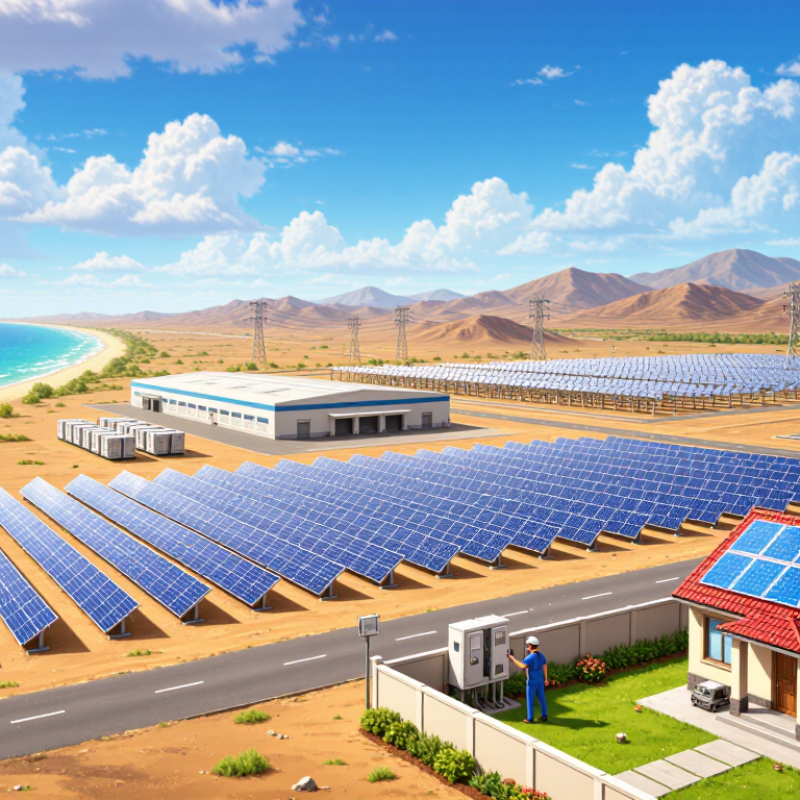
How to Choose Sun Energy Products for Global Buyers?
Understanding Global Solar Energy Product Categories
Global buyers should begin with product categories, not attractive price tags. Solar panels generate electricity, while inverters convert it for household or commercial use. Battery systems store excess power for evenings, cloudy periods, or unstable grids. Charge controllers protect batteries in smaller off-grid systems. Mounting structures connect equipment safely to roofs, walls, or open land.
Portable solar kits suit temporary sites, travel, and emergency power needs. Larger hybrid systems combine panels, batteries, inverters, and monitoring devices. Each category has different installation requirements, operating temperatures, and maintenance demands. A product tested in a dry climate may perform differently in humid coastal conditions. This is easy to overlook.
Tips: Check local voltage, grid frequency, sunlight levels, and roof materials before choosing equipment. Request clear technical sheets, performance data, safety certifications, and warranty terms. Confirm whether replacement parts and trained installers are available in the destination market. Battery capacity also needs careful calculation. Daily energy use, backup hours, and seasonal sunlight all matter. Bigger is not always better. I have seen buyers select oversized systems, then face unnecessary costs and complicated maintenance. Independent testing evidence can reduce that risk. Regional certification rules may differ, so buyers should verify current requirements with qualified local professionals before ordering.
| Solar Product Category | Primary Function | Typical Rated Range | Best-Fit Applications | Key Selection Dimensions | Important Global Buyer Considerations |
|---|---|---|---|---|---|
| Solar Photovoltaic Modules | Convert sunlight directly into direct-current electricity. | Residential and small commercial modules commonly range from approximately 350 W to 600 W per module; utility-scale modules can exceed 600 W. | Rooftop systems, ground-mounted solar farms, agricultural installations, commercial buildings and remote power systems. | Rated power, module efficiency, temperature coefficient, mechanical load rating, degradation rate, dimensions and warranty period. | Check local certification requirements, roof or land area, wind and snow loads, transport dimensions, installation orientation and expected solar irradiation. |
| Grid-Tied Solar Inverters | Convert the direct-current output of PV modules into grid-compatible alternating current. | Residential units are commonly about 1 kW–15 kW; commercial units often range from 20 kW to 250 kW; larger systems use central inverters rated in the hundreds of kilowatts or higher. | Homes, offices, factories, retail facilities and utility-scale grid-connected projects. | Continuous AC output, maximum DC input voltage, maximum input current, MPPT channels, efficiency, protection rating and monitoring functions. | Confirm grid voltage, frequency, phase configuration, anti-islanding rules, export limits, communication protocols and national electrical approvals. |
| Battery Energy Storage Systems | Store electrical energy for use during nighttime, outages or periods of high electricity prices. | Small residential systems are commonly 5 kWh–30 kWh; commercial systems may range from approximately 30 kWh to several megawatt-hours. | Backup power, self-consumption, peak-load reduction, microgrids, renewable-energy integration and time-of-use energy management. | Usable capacity, power rating, battery chemistry, round-trip efficiency, cycle life, depth of discharge, operating temperature and safety controls. | Evaluate fire-safety requirements, transport classification, thermal management, local grid rules, replacement strategy and whether the system is AC-coupled or DC-coupled. |
| Solar Charge Controllers | Regulate charging from PV modules to batteries and protect batteries from overcharging and excessive discharge. | Small off-grid controllers commonly range from 10 A to 60 A; larger systems use higher-current units or multiple parallel controllers. | Solar home systems, telecommunications equipment, boats, cabins, agricultural sites and small off-grid installations. | Maximum PV voltage, charging current, battery voltage, MPPT or PWM technology, load output, temperature compensation and protection features. | Match the controller to the battery chemistry, PV array voltage, ambient temperature and maximum short-circuit current under local conditions. |
| Solar Water Heating Systems | Use solar thermal collectors to heat water, reducing electricity or fuel consumption. | Domestic systems commonly use approximately 1.5 m²–6 m² of collector area; storage tanks often range from 100 L to 300 L for household use. | Domestic hot water, hotels, hospitals, dormitories, sports facilities and industrial preheating. | Collector type, absorber area, storage capacity, thermal performance, freeze protection, pressure rating and backup-heater compatibility. | Consider climate, seasonal solar availability, water hardness, roof structure, plumbing standards, frost risk and local maintenance capability. |
| Solar Water Pumps | Use solar-generated electricity to move water for irrigation, livestock, drinking-water supply or drainage. | Small systems may deliver less than 1 m³/h; agricultural and community systems can deliver several to tens of cubic metres per hour, depending on total dynamic head. | Farm irrigation, livestock watering, boreholes, rural water supply, fountains and water storage tanks. | Flow rate, total dynamic head, pump type, motor power, well diameter, dry-run protection and daily water demand. | Size the system using measured water levels, pipe length, elevation, seasonal sunlight, storage-tank capacity and local availability of spare parts. |
| Solar Street and Area Lighting | Provide outdoor illumination using a PV module, battery, LED luminaire and control system. | Common LED luminaire ratings are approximately 20 W–150 W; battery and PV sizes depend on required operating hours and local solar conditions. | Roads, pathways, parking areas, parks, campuses, security zones and rural public infrastructure. | LED efficacy, lumen output, mounting height, lighting distribution, autonomy days, battery capacity, dusk-to-dawn control and ingress protection. | Use a lighting design based on road width and required illuminance rather than wattage alone; account for rainy-season solar conditions and pole structural loads. |
| Off-Grid Solar Home Systems | Supply basic electricity where grid connection is unavailable, unreliable or uneconomical. | Basic systems commonly provide approximately 20 W–200 W of PV capacity; larger household systems may exceed 1 kW. | Lighting, phone charging, radios, small televisions, fans and other low-power household appliances. | Daily energy demand, peak load, battery capacity, appliance compatibility, modular expansion, payment or service model and maintenance needs. | Prioritize simple installation, user safety, local technical support, replacement batteries and performance during extended cloudy periods. |
| Portable Solar Generators and Power Stations | Store solar energy in an integrated battery and provide portable AC and DC power. | Battery capacities commonly range from approximately 200 Wh to 3,000 Wh; continuous AC output often ranges from about 200 W to 3,000 W. | Emergency backup, camping, field work, mobile offices, small appliances and temporary power needs. | Usable watt-hours, continuous and surge output, charging time, solar input limit, outlet types, weight, battery chemistry and thermal protection. | Verify plug configuration, transport restrictions, electrical safety approvals, operating temperature and the difference between rated and usable capacity. |
| Solar Monitoring and Energy Management Systems | Measure system performance, identify faults and optimize energy production, storage and consumption. | Monitoring can be applied to systems from small residential installations to multi-megawatt solar plants. | Residential energy management, commercial facilities, microgrids, remote assets and utility-scale PV projects. | Data accuracy, sampling interval, communication method, inverter compatibility, cybersecurity, alarm functions and historical data retention. | Check internet availability, data-hosting requirements, privacy rules, open communication protocols and access to downloadable performance data. |