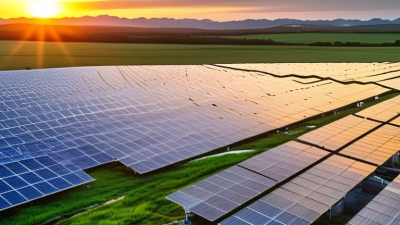
China offers an unusually broad landscape for homeowners who want to get solar panels for home. From Qinghai’s bright plateaus to Guangdong’s humid rooftops, sunlight is only one part of the decision. Local installer quality, roof structure, electricity prices, grid rules, after-sales service, and battery availability also matter.
The International Energy Agency reported that China led global solar growth, accounting for more than half of newly installed renewable power capacity in recent years. The National Energy Administration also recorded rapid distributed photovoltaic expansion, especially across eastern provinces with dense residential and industrial roofs. These figures show strong market depth, but they do not guarantee that every city offers the same value. A small roof under afternoon shade can perform worse than a larger roof in a less famous solar region.
IEA Executive Director Fatih Birol has described solar photovoltaic power as “the cheapest source of electricity in history.” That claim is encouraging, yet household savings still depend on installation costs, self-consumption, financing, and maintenance. No ranking is perfect. This guide compares ten Chinese locations through practical homeowner needs: solar resource, installer availability, local demand, grid access, and system payback potential. It also considers real details, such as roof orientation, summer cooling loads, winter heating, and coastal corrosion. Readers should verify current prices and local policies before signing a contract. A strong location helps, but careful installation matters more than a glossy sales promise.
China’s strongest solar sourcing locations are not identical. Xinjiang, Inner Mongolia, Qinghai, and Sichuan are important upstream regions for polysilicon and wafers. Jiangsu, Zhejiang, Anhui, Jiangxi, Guangdong, and Fujian offer denser finished-module manufacturing and export services. These ten locations deserve attention when building a home-solar supply chain.
The International Energy Agency reported in 2024 that China held over 80% of global solar manufacturing capacity across major supply-chain stages. The China Photovoltaic Industry Association recorded about 499 GW of module production in 2023. Scale is impressive, but it can mislead. A large factory does not guarantee suitable residential products.
Check the factory address, production line, and recent testing records. Request IEC 61215 and IEC 61730 evidence, serial-number traceability, warranty terms, and sample inspection results. Jiangsu and Zhejiang may simplify port logistics, while inland regions can offer upstream cost advantages. Compare both options. Freight distance, minimum order quantity, packaging strength, and after-sales response can change the real price. I would also verify whether the supplier manufactures modules or only trades them. That distinction is often overlooked. Independent inspection remains wise, even when paperwork appears complete.
China’s top 10 places to buy solar panels for home use include Shenzhen, Guangzhou, Foshan, Dongguan, Hangzhou, Ningbo, Shanghai, Suzhou, Hefei, and Jinan. These cities offer different purchasing advantages. Shenzhen and Dongguan suit buyers seeking export-ready suppliers and compact residential systems. Guangzhou and Foshan have dense electrical markets, where in-person inspection is easier. Hangzhou and Ningbo provide access to experienced photovoltaic distributors and logistics services. Shanghai and Suzhou are useful for technical consultations and system integration. Hefei and Jinan also serve regional installers and household energy projects.
Visit a physical showroom when possible. Check the panel surface for cracks, uneven cells, and damaged frames. Ask for current test reports, warranty terms, and installation instructions. For China-based projects, request documents matching applicable Chinese standards. For overseas use, verify recognized international certifications and import requirements.
Do not judge quality by appearance alone. A bright showroom can hide weak after-sales support.
Compare voltage, roof size, shading, inverter compatibility, and battery needs before paying. Request a complete quotation, including cables, brackets, delivery, and installation. Some sellers quote only the panel. That causes trouble later. I would also ask for serial-number traceability and a written response time for faults. My checklist is not perfect, because local regulations and grid rules differ. A trusted installer should inspect the roof, explain expected output, and admit when solar power is not practical for the property.
Shenzhen offers compact rooftop panels, microinverters, and smart monitoring equipment. Its electronics supply chain supports fast product updates and customization. Guangzhou is strong in residential panels, mounting rails, and backup batteries. Buyers can often compare many specifications in one market. Dongguan focuses on efficient modules, wiring, and small power systems. Its factories usually provide flexible order quantities. Foshan is known for solar water heaters, aluminum frames, and practical home energy kits. The city’s manufacturing experience supports sturdy, space-saving designs. Suzhou produces high-efficiency panels and precision electrical components. Its industrial testing environment can improve consistency.
Wuxi remains important for photovoltaic cells, panel materials, and production equipment. It offers deep technical knowledge, although supplier differences remain significant. Changzhou provides home panels, storage batteries, and integrated rooftop systems. Many suppliers emphasize installation convenience. Ningbo is useful for mounting structures, controllers, and marine-grade electrical parts. Its export experience can help with documentation. Hefei has growing capacity in cells, batteries, and energy storage research. Buyers may find advanced solutions, but lead times can vary. Xi’an supplies solar equipment, inverters, and engineering services. Its technical institutions add useful research support. I have seen impressive samples fail during heat, rain, or poor installation. Product claims still need independent verification.
China Top 10 Places to Get Solar Panels for Home?
China’s main solar sourcing hubs include Shenzhen, Guangzhou, Foshan, Xiamen, Ningbo, Shanghai, Suzhou, Wuxi, Changzhou, and Hefei. These locations offer different supplier networks and export experience. A nearby trading company may respond quickly, but a factory can provide better production records. The difference is not always obvious online.
Compare prices on the same basis. Check panel wattage, efficiency, warranty period, delivery terms, and included accessories. A low quote may exclude shipping, taxes, cables, or testing fees. Ask whether the price is EXW, FOB, or CIF. Request a formal quotation with model numbers and payment conditions. Small details matter.
Certifications need careful checking. For household panels, request valid IEC 61215 and IEC 61730 test documentation, plus CE evidence where applicable. ISO 9001 can indicate controlled processes, but it does not prove every panel is excellent. Ask for recent flash-test reports, electroluminescence images, serial tracking, and independent laboratory records. Inspect one sample before placing a large order. I have seen specifications look impressive while packaging felt weak and documentation remained incomplete. That should slow the decision. Check temperature coefficients, degradation terms, product warranty wording, and local grid compatibility. A supplier’s factory video is useful, but an on-site audit or independent inspection is stronger. Price still matters, just not alone.
A practical comparison of major Chinese solar-panel sourcing regions for residential projects
| Rank | Sourcing Location | Main Advantages | Common Residential Products | Indicative Panel Price Range | Certifications to Request | Quality-Verification Points | Typical Production Lead Time | Best Fit for Buyers |
|---|---|---|---|---|---|---|---|---|
| 1 | Jiangsu Province Changzhou and nearby areas |
Strong concentration of photovoltaic manufacturing, mature testing facilities, experienced export logistics, and broad component availability. | N-type TOPConBifacial modulesGlass-glass panels | Approx. RMB 0.65–1.05/W | IEC 61215, IEC 61730, ISO 9001; CE for European markets; UL 61730 for North America where applicable. | Verify EL images, flash-test reports, low-light performance, mechanical-load data, and serial-number traceability. | About 2–5 weeks for standard specifications | Homeowners and distributors seeking a balanced combination of price, quality, and export experience. |
| 2 | Zhejiang Province Ningbo, Huzhou, and surrounding areas |
Convenient port access, strong private manufacturing sector, flexible customization, and good packaging capability for overseas orders. | Monocrystalline panelsAll-black modulesSmall rooftop formats | Approx. RMB 0.70–1.15/W | IEC 61215, IEC 61730, ISO 9001; relevant local electrical and fire-safety documentation. | Check encapsulant type, junction-box rating, frame corrosion resistance, pallet protection, and warranty terms. | About 3–6 weeks | Residential rooftop projects requiring appearance options, smaller batch sizes, or customized packaging. |
| 3 | Guangdong Province Shenzhen, Dongguan, and nearby areas |
Excellent electronics supply chain, strong OEM and export-support services, fast communication, and convenient access to major ports. | High-efficiency modulesFlexible panelsPortable solar products | Approx. RMB 0.80–1.35/W | IEC 61215, IEC 61730, ISO 9001; CE, UKCA, or UL documentation according to destination. | Confirm cell origin, power tolerance, inverter compatibility, IP rating, thermal-cycle results, and product labeling. | About 2–6 weeks | Buyers needing integrated electronics, special form factors, or low-to-medium volume orders. |
| 4 | Anhui Province Hefei and surrounding areas |
Large-scale photovoltaic industrial base, access to upstream materials, competitive production costs, and standardized mass production. | TOPCon modulesLarge-format panelsBifacial products | Approx. RMB 0.63–1.00/W | IEC 61215, IEC 61730, ISO 9001, ISO 14001; destination-market certification when required. | Review factory audit results, process-control records, cell-mismatch rate, power-degradation data, and PID-resistance test results. | About 3–6 weeks | Cost-sensitive residential developments and buyers ordering standardized container quantities. |
| 5 | Shandong Province Jinan, Qingdao, and nearby areas |
Good access to northern China markets, established metal-processing supply chain, and convenient sea transportation through coastal ports. | Residential mono panelsRooftop systemsAgricultural solar formats | Approx. RMB 0.68–1.08/W | IEC 61215, IEC 61730, ISO 9001; CE or other market-specific approvals. | Inspect frame alloy, drainage design, snow-load rating, wind-load rating, moisture resistance, and packaging strength. | About 3–6 weeks | Projects in northern climates or buyers who also require mounting structures and related metal products. |
| 6 | Hebei Province Baoding and surrounding areas |
Long-standing solar manufacturing experience, mature glass and frame supply chain, and broad product availability for distributed generation. | Standard rooftop modulesGlass-backsheet panelsBifacial modules | Approx. RMB 0.66–1.06/W | IEC 61215, IEC 61730, ISO 9001; fire and electrical documentation appropriate to the installation market. | Compare temperature coefficient, annual degradation warranty, adhesive quality, soldering consistency, and outgoing inspection records. | About 3–7 weeks | Traditional home rooftop installations requiring common module dimensions and stable supply. |
| 7 | Jiangxi Province Nanchang, Shangrao, and nearby areas |
Competitive manufacturing costs, growing photovoltaic capacity, and access to domestic and export-oriented supply networks. | N-type modulesBifacial panelsStandard residential sizes | Approx. RMB 0.64–1.02/W | IEC 61215, IEC 61730, ISO 9001; CE, UL, or other destination-specific certification when needed. | Request independent power testing, EL inspection before shipment, PID testing, salt-mist results, and production-date records. | About 3–6 weeks | Importers seeking competitive pricing without requiring highly customized products. |
| 8 | Fujian Province Xiamen, Quanzhou, and nearby areas |
Strong export culture, efficient port logistics, experienced hardware suppliers, and good support for overseas residential installations. | Rooftop panelsMarine-area applicationsCompact modules | Approx. RMB 0.75–1.20/W | IEC 61215, IEC 61730, ISO 9001; salt-mist or corrosion-related testing for coastal applications. | Check corrosion protection, salt-mist test duration, IP rating, cable and connector compatibility, and export packaging. | About 3–6 weeks | Coastal homes, island projects, and overseas buyers who value shipping and export-document support. |
| 9 | Hubei Province Wuhan and surrounding areas |
Central-China logistics position, access to technical talent, and a developing supply chain for photovoltaic modules and electrical equipment. | Residential modulesDistributed-generation panelsSolar-plus-storage packages | Approx. RMB 0.72–1.18/W | IEC 61215, IEC 61730, ISO 9001; system-level certificates for storage or power-electronics products where included. | Evaluate supplier engineering support, system compatibility, product documentation, warranty response process, and spare-parts policy. | About 4–7 weeks | Buyers sourcing panels together with inverters, batteries, monitoring, or other residential energy equipment. |
| 10 | Sichuan Province Chengdu and surrounding areas |
Access to renewable-energy expertise, improving photovoltaic manufacturing capacity, and strong technical and engineering resources. | High-altitude applicationsResidential modulesSpecial-project panels | Approx. RMB 0.78–1.25/W | IEC 61215, IEC 61730, ISO 9001; additional structural or environmental testing for special locations. | Check altitude-related design assumptions, snow and wind loads, temperature coefficients, module dimensions, and installation guidance. | About 4–8 weeks | Mountainous regions, technically specified projects, and buyers requiring engineering assistance. |
Important comparison note: The price ranges are indicative ex-factory ranges for standard crystalline-silicon residential modules and can change with cell technology, wattage, order quantity, shipping terms, taxes, exchange rates, and market conditions. Before purchasing, request current quotations, third-party test reports, IEC 61215 and IEC 61730 certificates, factory-audit evidence, EL images, flash-test data, warranty conditions, and a pre-shipment inspection. Certification availability should always be confirmed for the destination country and the complete solar system.
Choosing the right Chinese solar panel supplier requires more than comparing prices. China added about 217 GW of solar capacity in 2023, according to the IEA PVPS Trends 2024 report. That scale shows strong manufacturing experience, but quality can still vary between factories. Ask for IEC test certificates, factory audit records, warranty terms, and recent shipment references. A reliable supplier should explain product tolerances clearly, not hide behind attractive quotations.
I would check the panel’s temperature coefficient, degradation rate, and performance in low light. NREL’s Photovoltaic Degradation Rates report identifies about 0.5% annual degradation as a common benchmark for modern modules. Request an independent inspection before shipment. Confirm serial-number tracking, packaging photos, and the exact bill of materials. A low price once looked efficient to me, but weak documentation can create expensive problems later. I still regard price as useful, though only as an initial filter.
Tips: Compare at least three suppliers. Verify certificates directly with testing laboratories. Ask for a sample panel or production video. Review the inverter and mounting compatibility with your roof. Check local electrical rules before ordering. Do not rely only on marketplace ratings; they may reflect communication, not long-term performance. Record every promise in the sales contract, including output guarantees, delivery dates, and warranty procedures.